

1.3 ATA vs. 1.5 ATA: Why That "Small" Number Actually Makes a Big Difference in Hyperbaric Oxygen Therapy

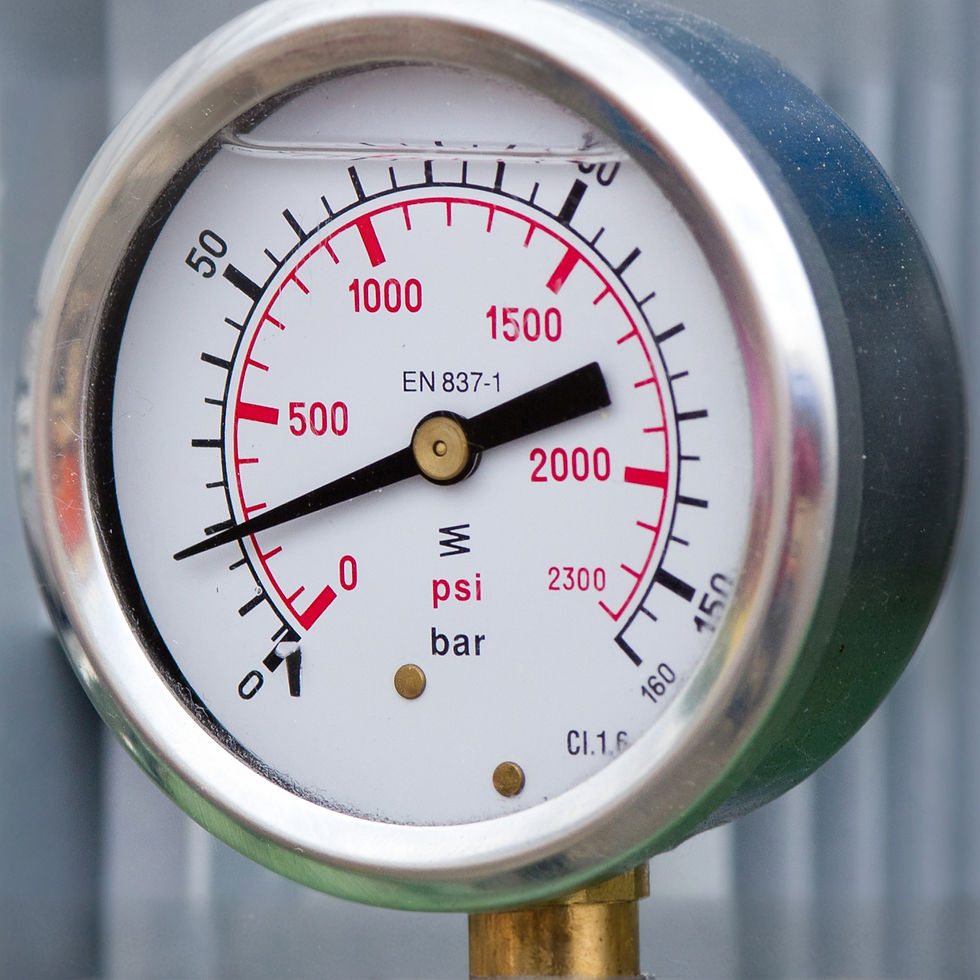
If you've been comparing hyperbaric oxygen therapy (HBOT) options, you've probably noticed that chambers are marketed at different pressure levels — most commonly 1.3 ATA and 1.5 ATA. At first glance, a jump of 0.2 ATA might not sound like much. But in hyperbaric medicine, pressure isn't just a number on a dial — it's the entire mechanism that drives how much oxygen actually reaches your tissues. Understanding this difference matters if you're deciding where to invest your time and money in treatment.
What Does ATA Actually Mean?
ATA stands for "atmospheres absolute," a measurement of pressure relative to sea level. Normal air pressure at sea level is 1.0 ATA. When you enter a hyperbaric chamber, that pressure is increased, which allows your blood plasma to dissolve and carry significantly more oxygen than it can at normal atmospheric pressure. The higher the ATA, the greater the pressure gradient — and the more oxygen your body is able to absorb during a session.
The Actual Oxygen Math: Henry's Law
Hyperbaric therapy works because of Henry's Law: the amount of oxygen that dissolves into blood plasma is directly proportional to the surrounding pressure of oxygen. At 1.0 ATA breathing normal air, plasma carries roughly 0.3 mL of dissolved oxygen per 100 mL of blood, on top of what hemoglobin carries.
Here's what that means with our setup specifically: because our chambers deliver 100% pure oxygen through a mask or cannula rather than just pressurizing room air, the effect is dramatic. Using the standard alveolar gas equation, breathing 100% oxygen at 1.3 ATA raises arterial oxygen pressure to roughly 885 mmHg, dissolving about 2.7 mL of oxygen per 100 mL of plasma — nearly nine times the amount dissolved during normal room-air breathing. At 1.5 ATA, that same 100% oxygen raises arterial oxygen pressure to roughly 1,040 mmHg, dissolving about 3.1 mL of oxygen per 100 mL of plasma — over ten times the normal amount, and about 17% more than a 1.3 ATA session delivers.
For an intuitive comparison: using the standard diving conversion of about 33 feet of seawater per additional atmosphere of pressure, 1.3 ATA is roughly equivalent to the water pressure 10 feet underwater, while 1.5 ATA is roughly equivalent to about 16 feet underwater.
The Difference Between 1.3 ATA and 1.5 ATA Chambers
Both 1.3 ATA and 1.5 ATA chambers are typically soft-sided units — a 1.5 ATA rating means a more heavily reinforced build (thicker fabric, reinforced seams, commercial-grade zippers) rather than a hard shell. That reinforcement is what allows the higher pressure ceiling, and as the math above shows, it's what lets us deliver roughly 17% more dissolved oxygen per session than a 1.3 ATA chamber achieves.
What This Means for You
If you're deciding between facilities, it's worth asking directly what ATA level you'll be treated at, since that's the number that actually determines the pressure gradient driving oxygen into your bloodstream. The difference between 1.3 and 1.5 ATA can meaningfully affect the depth and consistency of your results over a course of sessions.
At Seattle Hyperbarics, we use 1.5 ATA soft-shell chambers specifically because that extra pressure margin translates into a real, physics-backed increase in dissolved oxygen delivery — not just a bigger number on the display.
This post is for general information — talk with your doctor if you have specific health concerns.


Comments